Don’t Give Up on God’s Promises: Hold Fast in Faith
Quick Rundown
God’s promises are trustworthy because God Himself is faithful. Second Corinthians 1:20 teaches that the promises of God find their “Yes” in Jesus Christ. That does not mean every desire, plan, or personal expectation is automatically a promise from God. Biblical faith begins by asking what God has actually said, understanding His Word in context, and trusting His character when circumstances are uncertain. When the answer seems delayed, believers are called to remain anchored in Christ, walk in obedience, guard their hearts, and hold fast to hope.
Can You Trust God When a Promise Seems Delayed?
Yes. If God has truly promised something, His faithfulness does not depend on how quickly you see the result.
Paul writes:
“For all the promises of God in Him are Yes, and in Him Amen, to the glory of God through us.”
2 Corinthians 1:20, NKJV
In the surrounding passage, Paul points away from human uncertainty and toward the reliability of God. Jesus Christ is the great confirmation of God’s saving purposes. God’s Word is not unstable or contradictory. What He purposes in Christ is sure.
That gives Christians a firm foundation when life feels uncertain.
At the same time, we need an important distinction: faith is not calling something a promise simply because we want it badly enough. Biblical faith rests on what God has revealed, not on wishful thinking.
When we understand that difference, waiting becomes less about trying to make God act and more about learning to trust the God who is already faithful.
Start With Christ
The safest place to begin when thinking about God’s promises is Jesus Christ.
Second Corinthians 1:20 does not center the believer’s confidence on circumstances. It centers that confidence “in Him.” God’s redemptive plan, His covenant faithfulness, His grace, and the believer’s ultimate hope are fulfilled in Christ.
That changes the questions we ask.
Instead of beginning with, “When will God give me what I am waiting for?” begin with:
“What has God revealed about Himself in Christ?”
“What has Scripture actually promised?”
“Am I trusting God, or am I trusting a particular outcome?”
Those questions help move faith away from speculation and back toward truth.
Your circumstances may change. Your emotions may change. Your plans may change. Christ remains the solid foundation of Christian hope.
Keep Your Heart Free Through Forgiveness
Waiting can become more difficult when the heart is carrying resentment.
Perhaps someone disappointed you. Perhaps another person contributed to the difficulty you are facing. Perhaps you have replayed an offense so many times that it has become part of how you interpret everything around you.
Scripture repeatedly calls believers to forgive.
Forgiveness does not mean pretending that sin was acceptable. It does not mean trust must immediately be restored. It does not eliminate the need for wisdom, accountability, or healthy boundaries.
Forgiveness means refusing to make personal vengeance the ruler of your heart.
When you release an offense to God, you are not declaring that what happened was insignificant. You are choosing to entrust justice to Him while continuing to walk in obedience.
A heart consumed by bitterness will struggle to rest in God’s faithfulness. A forgiving heart is freer to pray, worship, listen, and move forward.
Give Your Faith a Biblical Target
Faith needs something solid to rest upon.
That means Christians should know the difference between a biblical promise and a personal desire.
There is nothing wrong with bringing desires to God. Scripture encourages believers to pray. But saying, “I want this” is not the same as saying, “God has promised this.”
Before claiming a biblical promise, ask:
Who was speaking?
Who was being addressed?
What was happening in the passage?
Was the promise conditional?
Was it given to a specific person or nation?
Does the New Testament apply this truth to believers in Christ?
Am I reading the verse in its surrounding context?
These questions do not weaken faith. They protect it.
God never asks us to build confidence on something He did not say.
The stronger our understanding of Scripture becomes, the better equipped we are to distinguish genuine biblical hope from assumptions we have placed upon God. You can also explore TBCS Bible courses for deeper study.
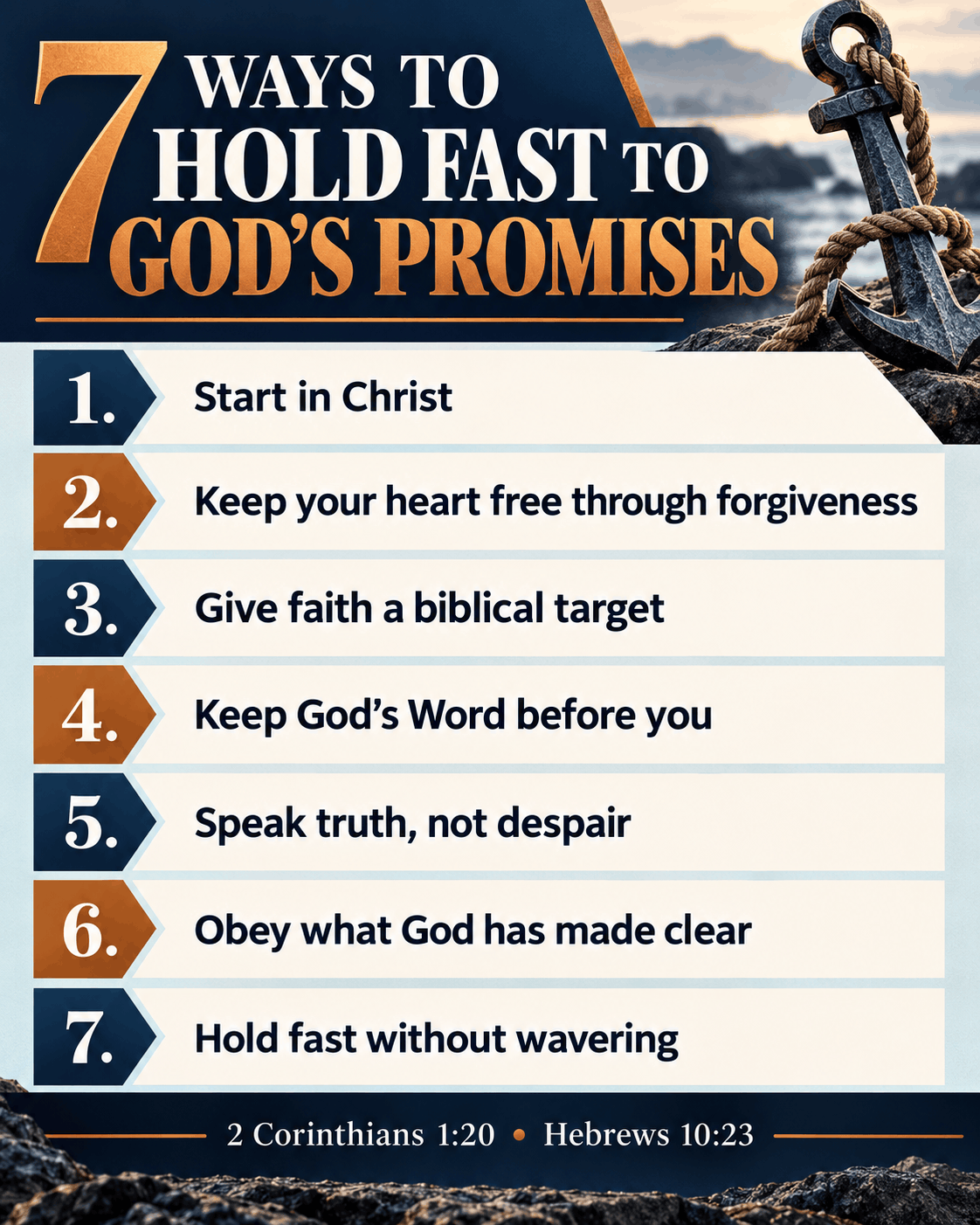
Keep God’s Word Before You
Waiting has a way of magnifying whatever receives most of our attention.
If all we rehearse is the delay, the disappointment can begin to dominate our thinking. If all we discuss is what has not happened, discouragement can slowly become our interpretation of God.
That is why believers need to return continually to Scripture.
Read the passage again.
Study its context.
Write down what it actually says.
Compare it with the rest of Scripture.
Pray through it.
Ask what the passage teaches about God’s character, Christ’s work, your responsibilities, and your hope.
Remembering God’s Word is not about reminding God of something He has forgotten. God does not forget His promises. It is often we who need to be reminded.
Scripture brings our thoughts back under the authority of truth. For more Scripture-based teaching, explore TBCS Bible study and biblical resources.
When fear says, “God has abandoned me,” His Word teaches us otherwise.
When impatience says, “Nothing is happening,” Scripture reminds us that God is not limited by our timetable.
When disappointment says, “There is no reason to hope,” the gospel points us again to Christ.
Speak Truth Instead of Despair
Words matter because they often reveal what is ruling the heart.
That does not mean Christians must pretend everything is fine. Scripture gives us many examples of faithful people expressing sorrow, confusion, fear, and grief before God.
Biblical faith is not positive thinking.
You can say, “This hurts.”
You can say, “I do not understand.”
You can say, “Lord, I am struggling to trust You.”
Those can be deeply faithful prayers.
The danger comes when temporary circumstances become final conclusions about God.
“This is difficult” is different from “God has failed me.”
“I do not see the answer yet” is different from “God cannot be trusted.”
“I am discouraged” is different from “There is no hope.”
Faith-filled speech does not deny reality. It interprets reality through the truth of God’s character.
When you catch yourself speaking from fear, stop and ask whether your words agree with Scripture.
Obey What God Has Already Made Clear
Sometimes believers become so focused on what they are waiting for that they neglect what God has already told them to do.
You may not know what will happen next, but you can still obey today. This kind of faithful waiting is explored further in Give God Room: How to Prepare for a New Season.
If God calls you to forgive, forgive.
If Scripture exposes sin, repent.
If you need to seek reconciliation, take the appropriate step.
If God has given you an opportunity to serve, serve faithfully.
If you need wisdom, ask for it.
If you need godly counsel, seek it.
If the answer has not yet come, continue doing what Scripture clearly requires.
Obedience is not a way to purchase an outcome from God. We do not earn His faithfulness by behaving correctly.
Rather, obedience is one of the ordinary ways genuine faith expresses itself.
Trusting God means more than saying we believe Him. It means arranging our lives according to what He has said.
Hold Fast Without Letting Doubt Rule You
Christians can experience moments of doubt without abandoning faith.
The Bible does not present faithful people as emotionless. Believers can struggle, ask questions, grieve, and still turn toward God.
What matters is what we do with those doubts.
Do we allow uncertainty to become unbelief?
Do we stop obeying because we cannot see the outcome?
Do we redefine God’s character according to present circumstances?
Or do we bring our questions back to Him? Another helpful resource is , which focuses on worshiping God through difficult seasons.
Hebrews gives believers a powerful instruction:
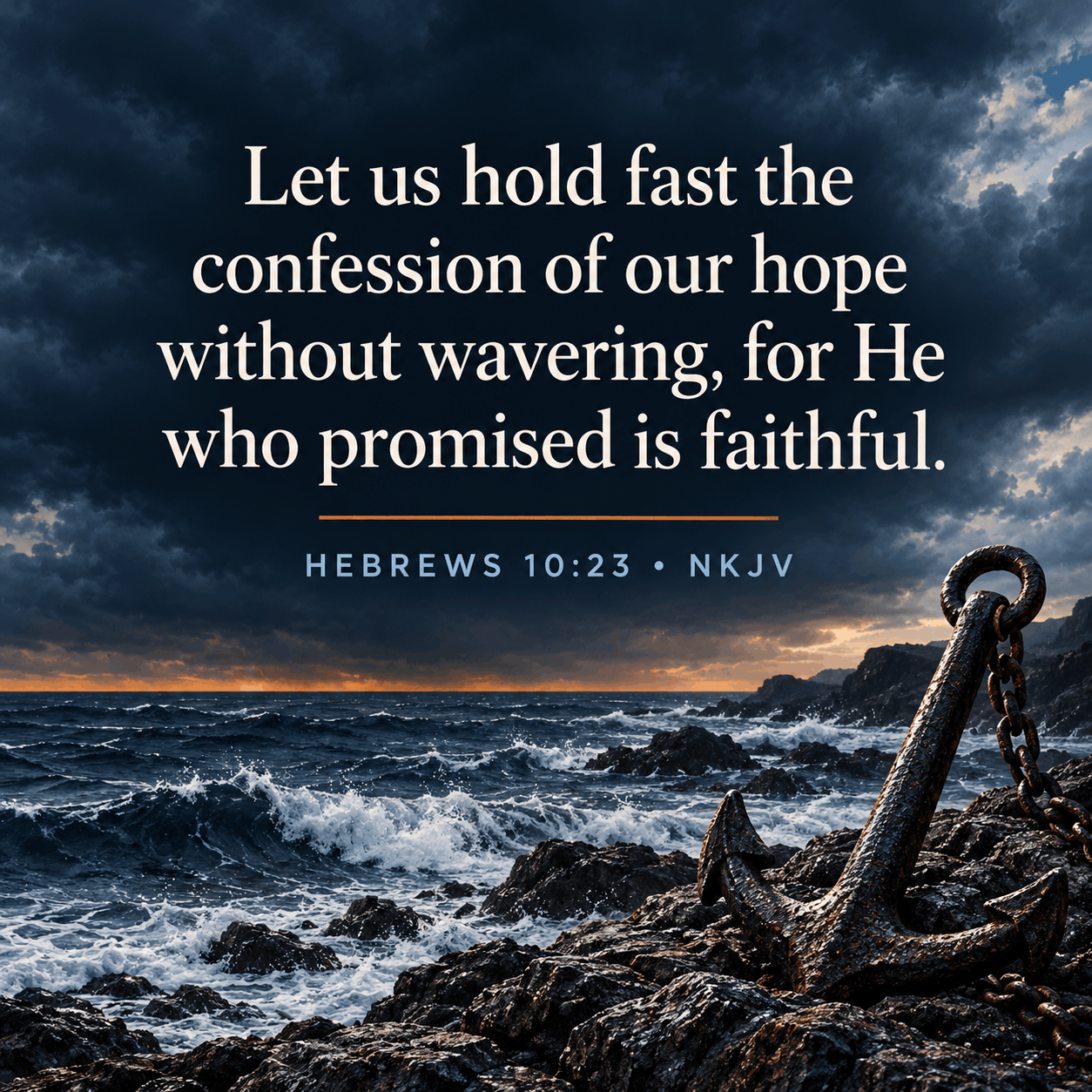
“Let us hold fast the confession of our hope without wavering, for He who promised is faithful.”
Hebrews 10:23, NKJV
Notice the reason Scripture gives for holding fast: “He who promised is faithful.”
The foundation is not our ability to feel strong every day.
The foundation is God.
Hebrews 10 also places perseverance in the context of drawing near to God, encouraging other believers, doing good, and continuing in Christian fellowship. We were never meant to endure alone.
What Does It Mean to Hold Fast to God's Promises?
Holding fast means refusing to surrender what Scripture clearly teaches merely because circumstances are difficult.
It means staying anchored in truth when emotions fluctuate.
It means continuing to pray when you do not yet understand.
It means obeying when obedience feels costly.
It means remaining connected to the body of Christ instead of withdrawing.
It means allowing God to define His own faithfulness instead of measuring Him by your preferred schedule.
Some answers may come differently than expected. Some desires may not be promises at all. Some biblical hopes will not reach their fullest realization until Christ returns.
But the believer’s ultimate confidence remains secure because our hope is rooted in Christ.
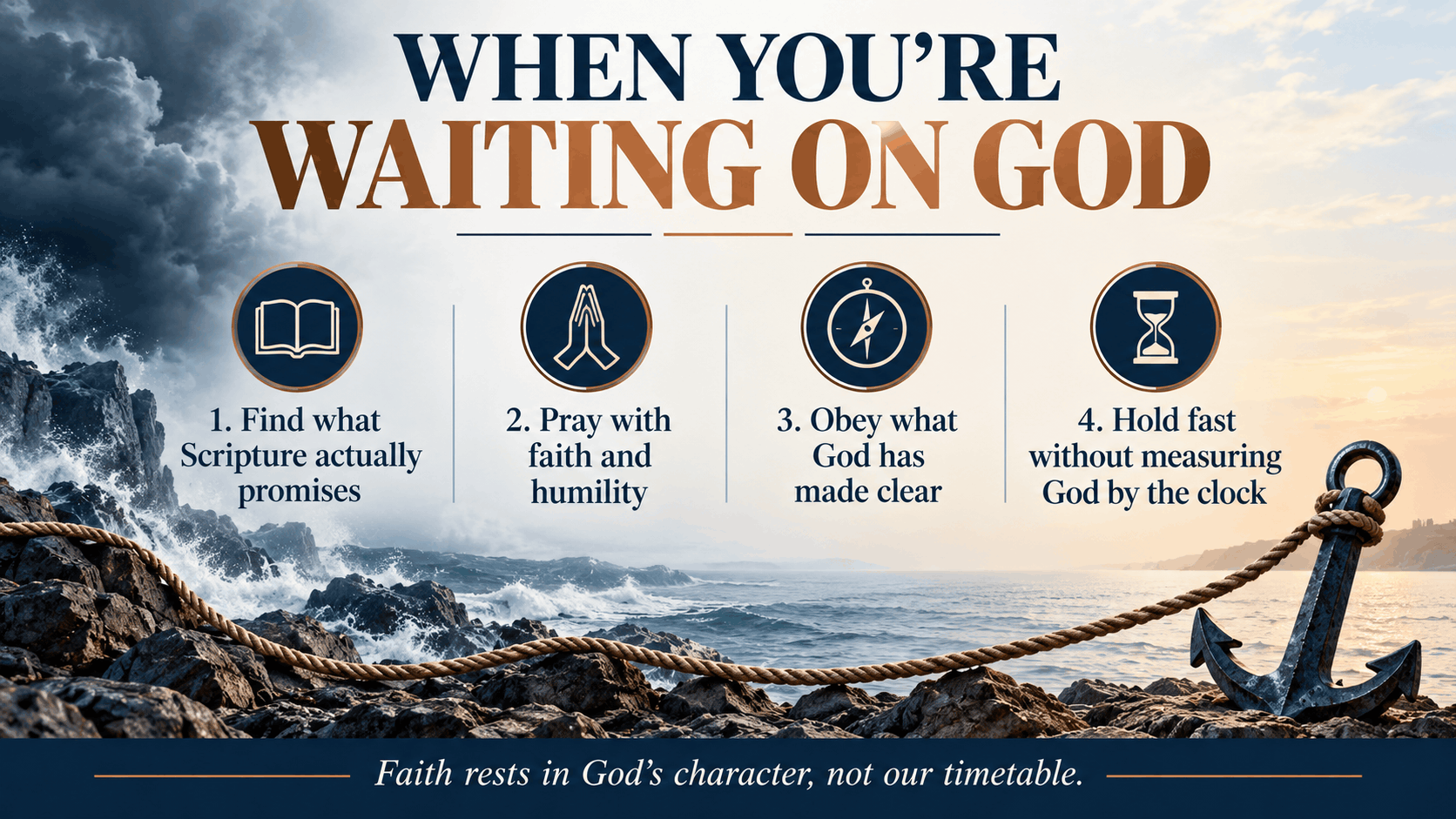
How to Hold Fast This Week
Choose several practical steps and put them into practice:
Identify one biblical truth you are depending on. Read the entire surrounding passage rather than relying on one isolated verse.
Examine your expectations. Ask whether they come directly from Scripture or primarily from your own hopes.
Forgive where bitterness has taken root. Pray for grace to release resentment while maintaining wise boundaries where needed.
Watch your words. Replace statements of hopelessness with honest prayers shaped by Scripture.
Take the next clear step of obedience. Do what God has already revealed instead of waiting for every question to be answered.
Stay connected to other believers. Ask mature Christians to pray with you and encourage you as you wait.
Faithfulness is often built in these ordinary choices.
A Prayer for When You Are Waiting
Lord, help me trust You according to Your Word rather than according to my circumstances. Show me where I have confused my desires with Your promises. Give me wisdom to understand Scripture correctly, grace to forgive, courage to obey, and strength to continue when I cannot see what You are doing.
Guard my heart from bitterness and my words from hopelessness. Teach me to bring my questions to You without turning away from You. Keep my hope anchored in Jesus Christ, and help me remember that You are faithful.
Amen.
Frequently Asked Questions
What does 2 Corinthians 1:20 mean when it says God’s promises are “Yes” in Christ?
It means God’s promises find their certainty and fulfillment in Jesus Christ. Paul’s emphasis is on the faithfulness of God and the reliability of the message concerning Christ. The verse does not teach that every personal wish will receive a “yes.” Christian confidence rests in God’s redemptive purposes fulfilled in His Son.
Does every promise in the Bible apply directly to every Christian?
No. Every part of Scripture is valuable, but individual promises must be understood in their biblical context. Some were given to Israel, some to particular individuals, and some were connected to specific covenant circumstances. Careful Bible study considers the original audience, surrounding passage, conditions, and how the truth relates to believers in Christ.
What should I do when God seems silent?
Continue doing what Scripture has already made clear. Pray, study God’s Word, remain in Christian fellowship, seek godly counsel, confess known sin, and continue serving faithfully. Silence does not mean God has stopped being faithful. Hebrews 10 connects perseverance with drawing near to God, holding fast to hope, and encouraging one another.
Is it wrong to struggle with doubt while I am waiting?
No. A struggle with doubt is not the same as choosing unbelief. The important question is where you take your uncertainty. Bring your fears and questions to God rather than allowing them to pull you away from Him. Faith often grows as believers continue seeking God even when they do not understand their circumstances.
How can I tell whether something is truly a promise from God?
Begin with Scripture rather than your feelings. Identify the passage, read its context, determine to whom it was originally given, notice any conditions, and compare your interpretation with the wider teaching of the Bible. If Scripture does not clearly promise the outcome you desire, pray for it humbly without presenting it as something God has guaranteed.
You may also find Counsel With the Holy Spirit First: Seek God Before You Make Your Move helpful when weighing decisions and seeking biblical direction.
Does waiting mean I should do nothing?
No. Biblical waiting is not passive resignation. You can pray, obey, prepare wisely, serve others, study Scripture, seek counsel, and remain faithful in your present responsibilities. Waiting on God means refusing to run ahead of Him while continuing to do what He has already placed before you.
Final Thoughts
When the answer seems delayed, the greatest question is not whether you can generate enough faith to change your circumstances.
The greater question is whether you will continue trusting the God who has revealed Himself as faithful.
So return to His Word.
Make sure the promise you are holding is truly biblical.
Keep Christ at the center.
Forgive.
Pray.
Obey.
Stay connected to other believers.
And when fear tells you to release your hope, remember why Scripture tells you to hold fast:
He who promised is faithful.
Don’t give up on God’s promises. Keep your faith anchored in what He has actually said.