Change, Keep, or Leave? How to Grow Wiser after a Difficult Season
Quick Rundown
What should you do when a difficult season finally ends?
Do not assume that everything should return to the way it was. A hard season may reveal something that needs to change, something valuable that needs to be protected, or something unnecessary that should not follow you forward.
Scripture calls believers to wisdom, sound judgment, godly counsel, endurance, and freedom from needless weight. The question is not simply, “How do I get past this?” A better question is: “What should this season change in the way I live?”
The Question After the Storm
Most of us know what to ask while trouble is happening.
“How do I get through this?”
"When will this be over?”
“Lord, what am I supposed to do?”
But there is another question that matters just as much, and we often ask it too late:
What am I supposed to learn now that I have been through it?
A difficult season can leave marks on us. Some are painful. Some are useful. Some can become unhealthy if we carry them too long.
That is why the right response to hardship is not simply to become more guarded before the next season. It is to become wiser.
Proverbs 27:23–24 tells its original readers to pay careful attention to the condition of their flocks because earthly resources and positions do not remain unchanged forever. The immediate subject is responsible stewardship, but the wisdom principle is valuable: pay attention to what is actually happening, because circumstances change and wise stewardship requires awareness.
So after a difficult season, it is worth conducting an honest spiritual inventory.
Not everything should stay.
Not everything should go.
Not everything should remain exactly as it was.
There are three questions to ask.
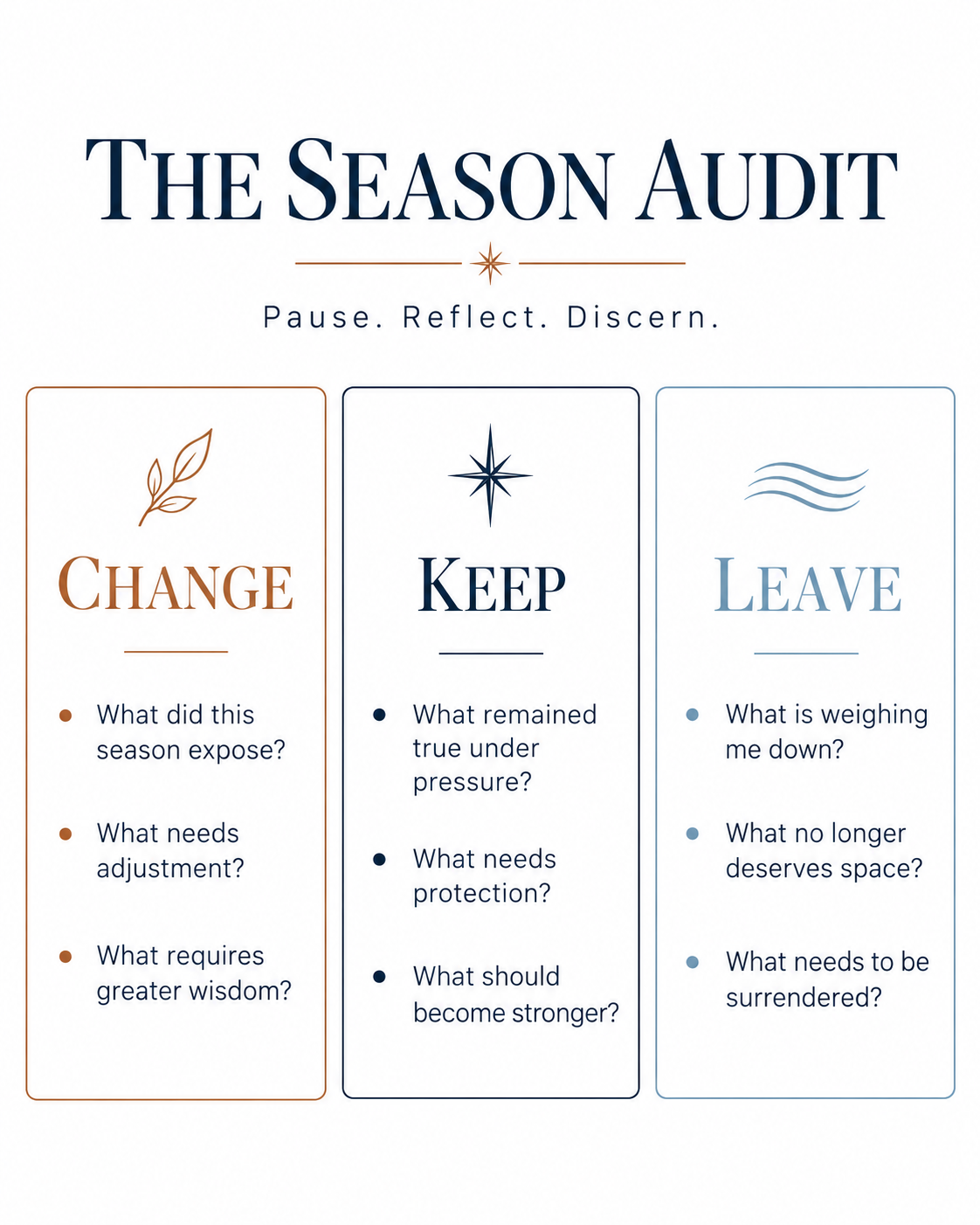
Those three questions sound simple. Answering them honestly may require prayer, Scripture, humility, and counsel.
CHANGE: What Did the Season Expose?
Hard seasons have a way of revealing weaknesses that easier seasons can hide.Pressure may expose poor boundaries.
Financial difficulty may reveal the absence of a plan.
Conflict may expose a communication problem that has been ignored.
Exhaustion may reveal that the calendar has been determining priorities instead of serving them.
A ministry challenge may reveal that too much depended on one person.
None of those observations automatically means that God directly caused the difficulty in order to teach a particular lesson. Scripture does not require us to interpret every hardship as a coded message from God.
But Scripture does call us to respond to reality with wisdom.
Proverbs 22:3 describes the prudent person as one who recognizes danger and takes appropriate action rather than continuing forward without regard for the consequences.
That is wisdom.
Sometimes faith means standing firm.
Sometimes wisdom means changing the way something is being done.
Those are not opposites.Change is not automatically failure.
People can become attached to a method simply because it once worked.
But a method is not a biblical conviction.
Your schedule can change while your commitment to God remains.
Your boundaries can change while your love for people remains.
Your ministry approach can change while your message remains faithful.
Your financial habits can change while your trust in God remains strong.
Your response to a relationship can change without becoming bitter toward the person involved.
Proverbs repeatedly emphasizes the importance of counsel. Proverbs 11:14 connects a multitude of counselors with safety, while Proverbs 15:22 teaches that plans are strengthened through counsel.
So before making a major change, ask people who are biblically mature enough to tell you the truth rather than simply confirm what you already want to do.
The CHANGE question
What did the last season reveal that I can no longer responsibly ignore?
That answer may lead to repentance.
It may lead to a new boundary.
It may lead to better preparation.
It may lead to asking for help.
Or it may simply lead to a wiser way of doing something you are still called to do.
KEEP: What Must Not Be Stolen From You?
Some lessons from hardship tell us what needs to change.
Others remind us what must remain.
This may be even more important.
Pain can become a poor teacher when we allow it to rewrite everything we believe.
One betrayal can make a person decide that nobody is trustworthy.
One ministry disappointment can become a reason to stop serving.
One failed plan can become evidence that trying again is foolish.
One painful relationship can make isolation look like wisdom.
One frightening experience can quietly become the governing principle behind every future decision.
That is not maturity.
It is possible to protect yourself so completely from yesterday's pain that you also protect yourself from tomorrow's obedience.
Paul reminded Timothy:
“God has not given us a spirit of fear, but of power and of love and of a sound mind.” — 2 Timothy 1:7, NKJV
Paul was not telling Timothy that Christians never experience fear. Timothy was being encouraged toward faithfulness in the midst of real pressure.
The point is not, “A believer will never be afraid.”
The point is, fear does not get to become the authority that determines our obedience.
Do not let the storm decide who you become
Matthew 14 gives us a vivid picture.
Peter stepped out of the boat at Jesus' command and walked toward Him on the water. Then Peter saw the strength of the wind, became afraid, and began to sink. He cried out, and Jesus immediately reached out to him.
The passage is not a promise that Christians can accomplish anything they attempt if they simply have enough confidence.
Peter stepped out because Jesus had told him to come.
That distinction matters.
Biblical faith is not confidence in ourselves. It is confidence in Christ.
So after a difficult season, do not merely ask what hurt.
Ask what remained true.
God's Word did not become less true because the season was painful.
Prayer did not become less important because the answer took longer than you wanted.
Wise Christian fellowship did not become less valuable because one person disappointed you.
Faithfulness did not become foolish because obedience became costly.
The KEEP question
What is good, biblical, and faithful that I need to protect from the effects of this season?
Keep your devotion to God's Word.
Keep humility.
Keep prayer.
Keep teachability.
Keep healthy relationships.
Keep the convictions Scripture has established.
Keep the lessons you learned without allowing the pain itself to become your identity.
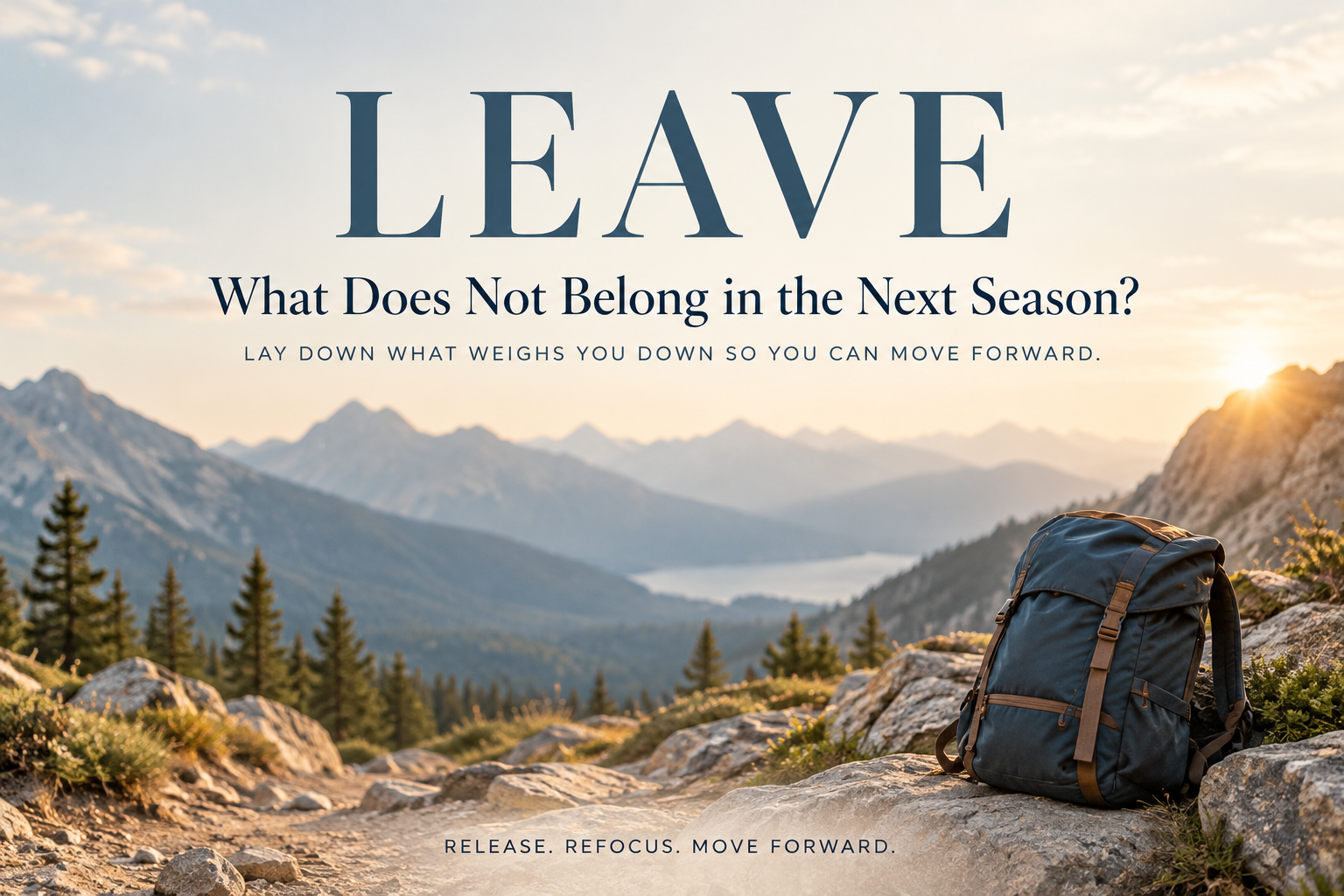
LEAVE: What Does Not Belong in the Next Season?
Here is where discernment becomes especially important.
There are things we carry simply because we have carried them for so long.
A responsibility.
A resentment.
An argument.
An expectation.
A habit.
A need to prove ourselves.
A battle we keep fighting long after it stopped accomplishing anything worthwhile.
Hebrews 12 gives believers a useful distinction. The writer tells Christians to lay aside both sin and weight as they run the race before them.
That means not everything that hinders you is necessarily sinful.
Some things are simply heavy.
Something can be permissible and still be unhelpful for this season.
Something can have been useful once and no longer deserve the same place in your life.
Something can matter without requiring all of your time.
Something can be a real disagreement without becoming your personal mission to win.
Paul told Titus to avoid foolish disputes and arguments that were “unprofitable and useless.”
That is an important word for people who feel responsible for fighting every battle.
Every battle you can fight is not necessarily a battle you should fight.
Busy for God, but too busy to be with God
The account of Martha and Mary provides another warning.
Martha was occupied with serving, but Jesus told her she was worried and troubled about many things while Mary had chosen what was most necessary in that moment.
Martha's activity was not presented as immoral.
The problem was that activity had overtaken attention to Christ.
Christians can do the same thing.
It is possible to be busy with church, responsibilities, meetings, projects, people, problems, and obligations while neglecting the spiritual life that should sustain all of them.
Some things need to leave simply because they are occupying room needed for something better.
The LEAVE question
What am I carrying that God has not required me to keep carrying?
Perhaps it is bitterness.
Perhaps it is a pointless argument.
Perhaps it is an unrealistic expectation.
Perhaps it is overwork.
Perhaps it is the illusion that everything depends on you.
Perhaps it is the belief that because something happened once, it must happen again.
Leave the sin.
Lay down the unnecessary weight.
Learn the lesson.
Then keep moving.
When You Cannot Tell Whether to Change, Keep, or Leave
Some decisions fit neatly into one category.
Others do not.
When the answer is unclear, resist the urge to make a permanent decision from a temporary emotional state.
Instead, slow the decision down enough to test it.
Ask whether Scripture gives a clear command. Consider whether you are responding from conviction or merely reacting to pain. Seek counsel from people who are mature enough to disagree with you. Look at the fruit the present pattern is producing. Pray for wisdom before deciding that discomfort itself must be God's direction.
And remember: not every difficult season is spiritual attack.
Some hardships arise from living in a fallen world. Some come through the choices of other people. Some result from our own decisions. Some are ordinary limitations of life. Scripture also teaches that spiritual opposition is real, but wisdom does not require us to label every setback as an attack from the enemy.
Whatever caused the season, the Christian question remains useful:
How can I respond faithfully now?
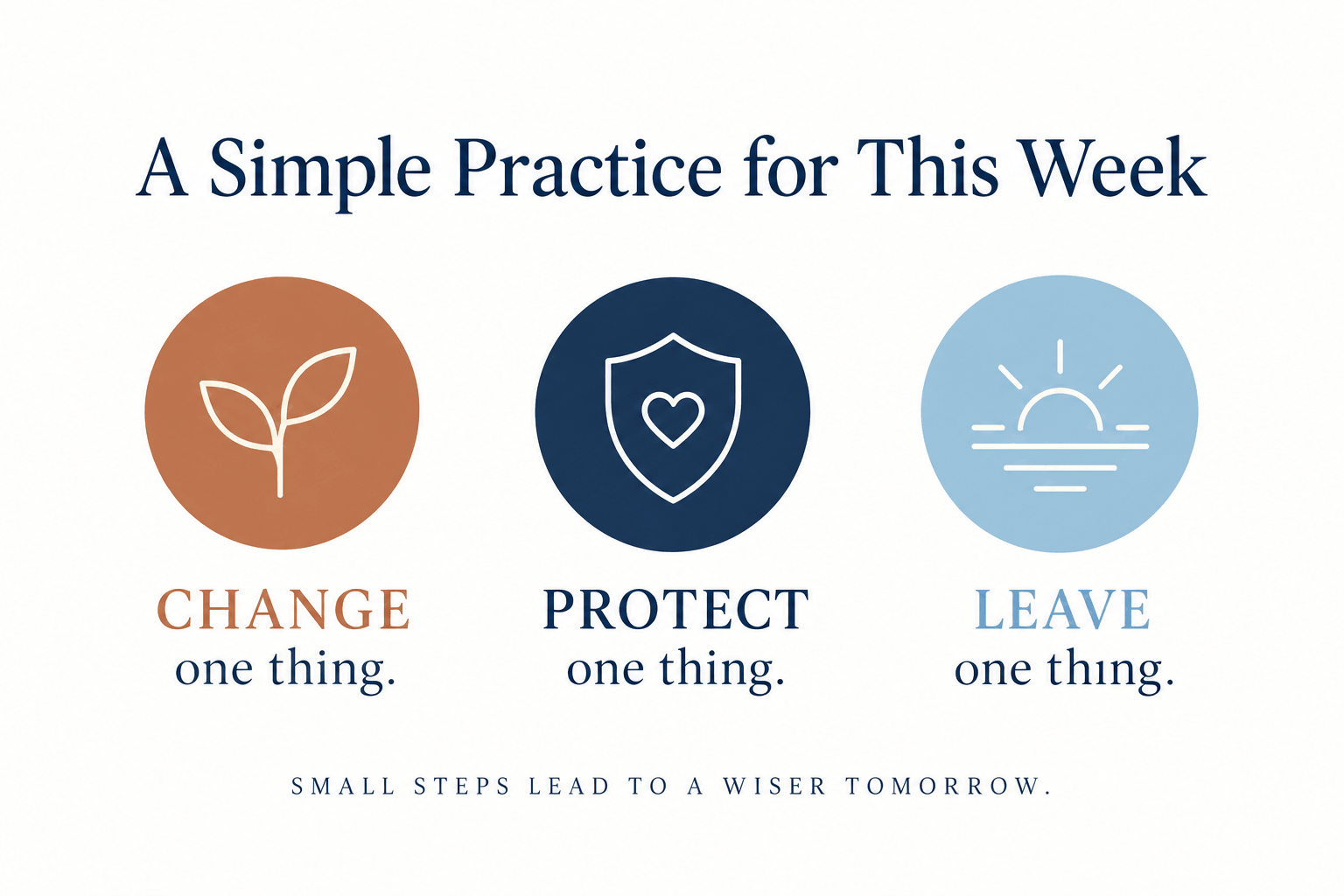
A Three-Step Practice for This Week
You do not need to reorganize your entire life by Friday.
Make the lesson concrete.
Change one thing. Identify one weakness the last season exposed and make one specific adjustment. Not “I need better boundaries,” but something measurable enough to practice.
Protect one thing. Identify one biblical conviction, healthy relationship, spiritual discipline, or important responsibility that the season tempted you to neglect. Decide how you will intentionally preserve it.
Leave one thing. Name one sin, unnecessary burden, pointless conflict, resentment, distraction, or obligation that should not receive the same space in the next season.
Then pray over all three.
The goal is not dramatic reinvention.
It is wiser obedience.
What Will You Build Afterward?
You may not have chosen the season.
You may not have chosen the loss, conflict, disruption, disappointment, or change that came with it.
But what happens next still matters.
You can emerge from hardship more fearful, or you can allow Scripture to make you more discerning.
You can build walls around everything, or you can learn where healthy boundaries actually belong.
You can carry yesterday into every tomorrow, or you can keep the lesson while laying down the weight.
The goal is not to pretend the difficult season did not matter.
The goal is to refuse to waste what can be learned from it.
Change what wisdom exposes.
Keep what Scripture confirms.
Leave what hinders faithful obedience.
Same truth.
Higher ground.
Frequently Asked Questions
Does every difficult season mean God is teaching me a specific lesson?
Not necessarily. Scripture does not teach that every hardship contains a hidden message that Christians must decode. Difficulties can come from many causes. What Scripture does encourage is a wise and faithful response. We can pray, examine ourselves honestly, seek counsel, repent where necessary, and allow hardship to strengthen endurance without claiming certainty about why every event happened.
How do I know when to persevere and when to make a change?
Begin with Scripture. A clear biblical command should not be abandoned simply because obedience becomes difficult. When Scripture leaves room for judgment, consider wise counsel, responsibilities, motives, consequences, and whether the current pattern is producing unnecessary disorder. Proverbs emphasizes the value of multiple counselors when plans and decisions are being made.
Is walking away always a sign that I am giving up?
No. Sometimes quitting comes from fear or impatience, but leaving something can also be an act of wisdom. Scripture tells believers to abandon sin, lay aside unnecessary weight, and avoid disputes that accomplish nothing spiritually useful. The important question is not simply whether you left, but why you left and whether the decision is consistent with biblical faithfulness.
What should I make sure I keep after a painful season?
Keep what remains true according to God's Word: faith in Christ, prayer, obedience, love, humility, forgiveness, fellowship, wisdom, and commitment to Scripture. You may need to change methods or establish healthier boundaries, but pain should not be allowed to redefine biblical convictions.
How can I keep fear from controlling my next season?
Do not pretend fear is absent. Bring it into the light through prayer, Scripture, wise counsel, and obedient action. Paul encouraged Timothy toward power, love, and sound judgment rather than allowing fear to dictate his ministry. Courage is not the absence of concern; it is refusing to make fear your final authority.
Final Thoughts
The right response to a difficult season is not to become afraid of the next season.
It is to become wiser.
There should be evidence that you learned something.
Something may need to change.
Something may need to stay.
Something may finally need to go.
Ask God for the wisdom to know the difference, the humility to make the necessary adjustment, and the faith to walk into the next season without allowing the last one to own you.