.
Biblical Insights & Resources
Short teachings, Scripture study, and practical faith for adults growing in the Word. New articles added regularly — written to help you read the Bible with greater depth and confidence.
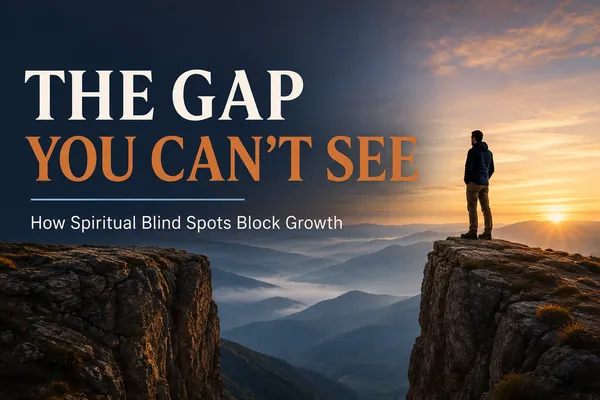
Spiritual Blind Spots: The Gap You Can’t See | TBCS
SPIRITUAL GROWTH • BIBLICAL WISDOM
The Gap You Can’t See: How Spiritual Blind Spots Block Growth
By Erik Henry
THE SHORT RUNDOWN
A spiritual blind spot is a belief, habit, or attitude we cannot accurately see in ourselves.
The most dangerous gap is often not what we do not know, but what we are convinced we already understand.
Scripture, prayer, wise counsel, and humility help uncover false assumptions.
Real breakthrough begins when we let God renew our thinking and correct our understanding.
When What Feels Right Is Wrong
Some of the greatest limits in life are not caused by what we do not know. They are caused by what we are sure we know—but have wrong.
That is the gap we cannot see. It may appear in the way we understand Scripture, respond to correction, make decisions, handle relationships, or judge our own motives. Because the belief feels reasonable, we rarely stop to test it. We simply act on it.
Proverbs 14:12 warns that a way can seem right to a person while leading toward destruction. The problem is not always open rebellion. Sometimes the problem is sincere confidence built on a false conclusion. A person can work hard, pray earnestly, and remain committed—yet keep producing the wrong result because the belief guiding those efforts is flawed.
This is why spiritual growth requires more than information. It requires a teachable heart.

What Is a Spiritual Blind Spot?
A spiritual blind spot is an area of our thinking, character, or behavior that we cannot evaluate clearly on our own. Other people may notice it. The results may reveal it. Scripture may challenge it. Yet we remain unaware because our current point of view feels normal and correct.
Proverbs 21:2 explains that people tend to view their own ways as right, but the Lord weighs the heart. We naturally interpret our choices through our motives, experiences, hurts, and assumptions. God sees beyond those filters. He sees what is true.
Blind spots do not mean we are dishonest about everything. They mean our self-understanding is limited. Every person has areas that need God’s light, and every growing believer must remain willing to be corrected.
Why We Cannot Fix What We Cannot See
Jesus addressed this problem in Matthew 7:3 when He described a person who noticed a speck in another person’s eye while missing the plank in his own. It is often easier to identify someone else’s weakness than to recognize the same kind of problem in ourselves.
We cannot repair a problem we refuse to recognize. We also cannot change an assumption we never question. When we defend ourselves too quickly, blame circumstances, or dismiss wise correction, the blind spot stays protected.
This does not mean every criticism is accurate. It means correction deserves honest evaluation. Mature believers test what they hear against Scripture, pray about it, and look for patterns in the fruit their lives produce.
The Cost of Wrong Understanding
Hosea 4:6 connects a lack of knowledge with serious consequences. Ignorance does not pause the outcome of a choice. If we misunderstand a biblical principle, misread a situation, or follow an unhealthy pattern, the results still arrive.
A wrong belief can affect many areas of life:
In marriage, it can turn a desire to be heard into a habit of refusing to listen.
In ministry, it can make control look like leadership.
In finances, it can make impulse feel like faith.
In spiritual life, it can make familiarity with Scripture feel like obedience to Scripture.
In relationships, it can make defensiveness feel like discernment.
The longer a false belief goes unexamined, the more normal it becomes. We may then try harder without getting better. Working harder from the wrong understanding often produces the wrong result faster.
The Danger of Saying, ‘I Already Know’
Knowledge is not the enemy. Confidence is not the enemy. The danger begins when confidence closes the door to learning.
Proverbs 26:12 gives a severe warning about being wise in our own eyes. A person who believes he cannot be mistaken becomes difficult to teach. He may hear correction as disrespect, questions as opposition, and new insight as a threat.
Humility takes a different posture. It says, “I may be missing something.” Humility does not require us to abandon conviction. It requires us to keep our convictions under the authority of God’s Word.
A teachable Christian can hold a belief strongly and still ask whether it has been interpreted and applied correctly. That kind of humility is not weakness. It is access to growth.
How God Reveals Spiritual Blind Spots
God may expose a blind spot in several ways. Scripture may confront an assumption. A trusted person may point out a pattern. Repeated consequences may show that our approach is not producing good fruit. The Holy Spirit may bring conviction during prayer.
Psalm 139:23–24 gives us a model for this process. David asks God to search his heart, test his thoughts, reveal any harmful way, and lead him in the everlasting way. This prayer is powerful because it invites examination instead of merely asking for relief.
At times, we ask God to change a situation while He first wants to change our understanding of the situation. Romans 12:2 teaches that transformation comes through the renewing of the mind. When our thinking changes under the truth of God’s Word, our choices and responses can change too.
Six Steps for Finding the Gap You Cannot See
Audit one area of your life. Choose a place where you feel stuck—such as marriage, finances, ministry, health, or spiritual growth. Write down what you currently believe about why the problem exists.
Question the assumption. Ask: Is this actually true? What evidence supports it? What would I notice if my assumption were wrong?
Pray for revelation, not only relief. Ask God to show you what you are not seeing. Give Him permission to correct the way you are interpreting the problem.
Look at the fruit. Jesus said a tree is known by its fruit (Matthew 7:20). Examine the repeated results of your beliefs and actions. Good intentions do not automatically produce good fruit.
Replace defensiveness with curiosity. When someone offers correction, pause before answering. Ask, “Is there something here I need to hear?” You can evaluate the message without reacting to it immediately.
Ask God for wisdom. James 1:5 teaches believers to ask God for wisdom. God is not threatened by a sincere question. He welcomes the person who wants truth more than the comfort of being right.

What Does a Spiritual Breakthrough Look Like?
A breakthrough is not always an immediate change in circumstances. Sometimes the first breakthrough is seeing the situation truthfully.
You may recognize that a conflict is not only about the other person. You may discover that a ministry frustration is connected to pride or fear. You may realize that a long-held interpretation does not fully match the context of Scripture. That corrected understanding creates room for a different response.
Breakthrough often begins with a question: “Lord, what am I not seeing?” The answer may be uncomfortable, but it can also be freeing. Once the hidden gap becomes visible, it can be addressed with truth, wisdom, repentance, and faithful action.
Stay Curious, Teachable, and Rooted in Scripture
Spiritual maturity is not proven by never being wrong. It is shown by how we respond when God reveals that our understanding needs correction.
Stay curious. Stay teachable. Keep growing. Trust God enough to question your assumptions, seek wisdom, and let Scripture examine your thinking. Some of the greatest leaps in your life may come when God shows you where you were wrong—and you have enough humility to change.

Frequently Asked Questions
What is a spiritual blind spot?
A spiritual blind spot is a belief, attitude, motive, or behavior that a person cannot see accurately in himself or herself. Scripture, prayer, wise counsel, and the fruit of our choices can help reveal it.
How can Christians identify blind spots?
Christians can identify blind spots by asking God to search their hearts, testing assumptions against Scripture, listening to trustworthy counsel, and honestly examining repeated outcomes.
Why is humility important for spiritual growth?
Humility keeps a believer open to truth and correction. It allows a person to learn, repent, and change when a belief or behavior does not agree with God’s Word.
Does spiritual breakthrough always change the situation?
No. Sometimes God changes our understanding before He changes our circumstances. Renewed thinking can lead to wiser choices, healthier responses, and lasting spiritual growth.
What Bible verses address spiritual blind spots?
Helpful passages include Proverbs 14:12, Proverbs 21:2, Matthew 7:3, Hosea 4:6, Proverbs 26:12, Romans 12:2, Psalm 139:23–24, Matthew 7:20, and James 1:5.



Copyright 2026. Tabernacle Bible College and Seminary. All Rights Reserved.